
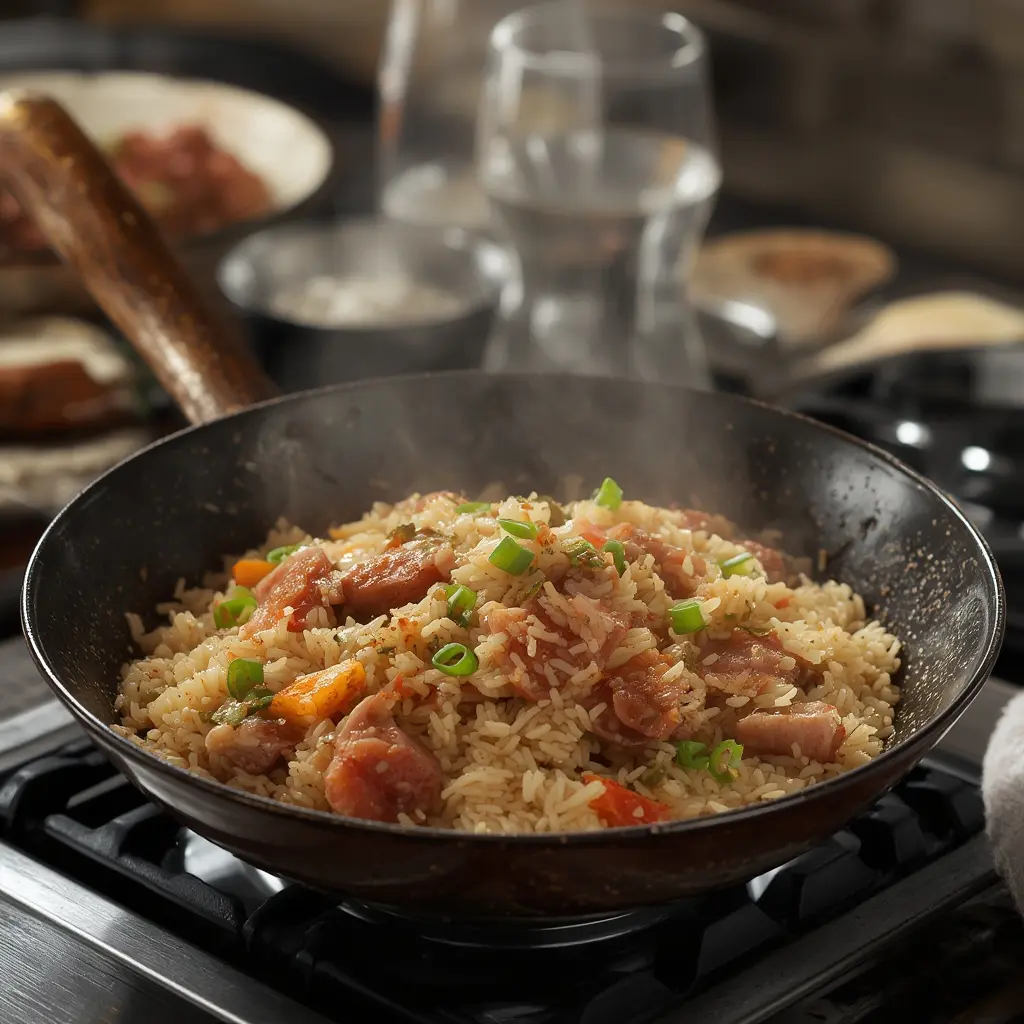
The Leftover Ham Trick That Changed My Weeknight Dinners Forever
Picture this: It’s 6 PM on a Tuesday. You’ve got half a glazed ham sitting in the fridge from Sunday’s dinner, a bag of day-old rice, and a produce drawer that’s one day away from becoming a science experiment. Most people would order takeout. But what if I told you that those exact ingredients are the starting lineup for one of the most satisfying meals you’ll make all week?
That’s exactly how I stumbled into making this dish on a whim — and honestly, it became a staple so fast that I now deliberately save leftover ham just to make it again. The combination of smoky, salty ham with savory-seasoned rice and crisp vegetables hits every flavor note your taste buds are looking for after a long day. It’s the kind of dinner that makes you feel like a kitchen genius without breaking a sweat.
If you’ve been scrolling through ham and rice recipes looking for something that actually delivers on flavor without a complicated ingredient list, you’re in the right place. This is weeknight cooking at its absolute best — fast, flexible, and genuinely delicious.
—
🍽️ At a Glance:
- ⏲️ Prep: 10 min
- 🔥 Cook: 15 min
- ⏰ Total: 25 min
- 🍴 Serves: 4
- 📊 Level: Easy
- 🌍 Cuisine: Asian-Inspired
- 🥘 Type: Main Course / One-Pan Meal
- 🥗 Diet: Dairy-Free
—
What Makes This Ham Stir Fry Rice So Irresistible
There are hundreds of fried rice variations out there, but this one earns a permanent spot in your recipe rotation for very specific reasons:
- It genuinely uses what you already have. No grocery run required. Leftover ham, cold rice, a few pantry staples — that’s your dinner sorted.
- The flavor is complex without being complicated. Smoky ham caramelizes beautifully at high heat, adding a depth that plain chicken or shrimp just can’t replicate.
- It’s faster than delivery. From fridge to table in under 30 minutes, no kidding.
- Completely customizable. Swap the vegetables, dial up the heat, add an extra egg — this recipe bends to whatever you’re working with.
- Budget-friendly without tasting like it. Stretching leftover ham across four servings means this meal costs practically nothing per plate.
- Kids and picky eaters approve. The mild smokiness of ham and the familiar comfort of fried rice make this a crowd-pleaser across all ages.
—
What You’ll Need
For the Stir Fry Base:
- 3 cups cooked white rice (day-old, cold rice works best)
- 1½ cups cooked ham, diced into ½-inch cubes
- 2 tablespoons sesame oil (divided)
- 1 tablespoon vegetable or avocado oil
- 3 cloves garlic, minced
- 1 teaspoon fresh ginger, grated (or ½ tsp ground ginger)
For the Vegetables:
- 1 cup frozen peas and carrots, thawed
- ½ cup diced white or yellow onion
- 2 green onions, sliced (whites and greens separated)
For the Sauce & Seasoning:
- 3 tablespoons low-sodium soy sauce
- 1 tablespoon oyster sauce (optional but highly recommended)
- 1 teaspoon fish sauce (optional, for umami depth)
- ½ teaspoon white pepper
- Pinch of sugar
Eggs:
- 3 large eggs, lightly beaten
Optional Add-ins:
- Red bell pepper, diced
- Corn kernels
- Baby bok choy, roughly chopped
- Chili garlic sauce or sriracha for heat
- Toasted sesame seeds for garnish
A note on the rice: This recipe is truly at its best with cold, day-old rice. Freshly cooked rice tends to clump and turn mushy at high heat. If you’re making this spontaneously, spread freshly cooked rice on a baking sheet and refrigerate it for at least an hour before cooking.
—
Kitchen Essentials
- Wok or large cast-iron skillet — High sides and excellent heat retention are key for that characteristic smoky “wok hei” flavor
- Wooden spoon or wok spatula — You’ll be tossing constantly, so a good flat-edged spatula is your best friend here
- Small mixing bowl — For pre-mixing your sauce ingredients
- Sharp knife and cutting board — For dicing that ham efficiently
- Microplane or fine grater — If using fresh ginger
—
How to Make Ham Stir Fry Rice (Step-by-Step)

Before you touch the stove, have every ingredient prepped and within arm’s reach. Stir frying moves fast — this isn’t the time to be hunting down the soy sauce.
- Mix the sauce: In a small bowl, whisk together the soy sauce, oyster sauce, fish sauce (if using), white pepper, and sugar. Set it right next to the stove so you can pour it in the moment you need it.
- Break up the cold rice: Use clean hands or a fork to separate any clumps in your cold rice. Loose, individual grains fry up beautifully; packed clumps steam instead of sear.
- Heat the wok: Place your wok or large skillet over high heat. Let it get genuinely hot — you’ll know it’s ready when a drop of water flicked in evaporates within one second. This step is non-negotiable for great fried rice.
- Sear the ham: Add 1 tablespoon of vegetable oil and swirl to coat. Toss in the diced ham and let it sit undisturbed for 60–90 seconds. You want caramelized, slightly crispy edges on those cubes — that’s where the magic flavor lives. Stir briefly, then transfer to a plate.
- Sauté the aromatics: Add another ½ tablespoon of vegetable oil to the same wok. Add the diced onion and the white parts of your green onions. Cook, stirring frequently, for about 2 minutes until softened and fragrant. Add the garlic and ginger and stir constantly for 30 seconds — garlic burns fast at this temperature, so keep it moving.
- Add the vegetables: Toss in the peas, carrots, and any other vegetables you’re using. Stir fry for 1–2 minutes until heated through and just starting to soften at the edges.
- Scramble the eggs: Push everything to one side of the wok and pour the beaten eggs into the empty space. Let them set for about 15 seconds, then scramble them gently until just cooked through but still slightly soft. Fold them into the vegetable mixture.
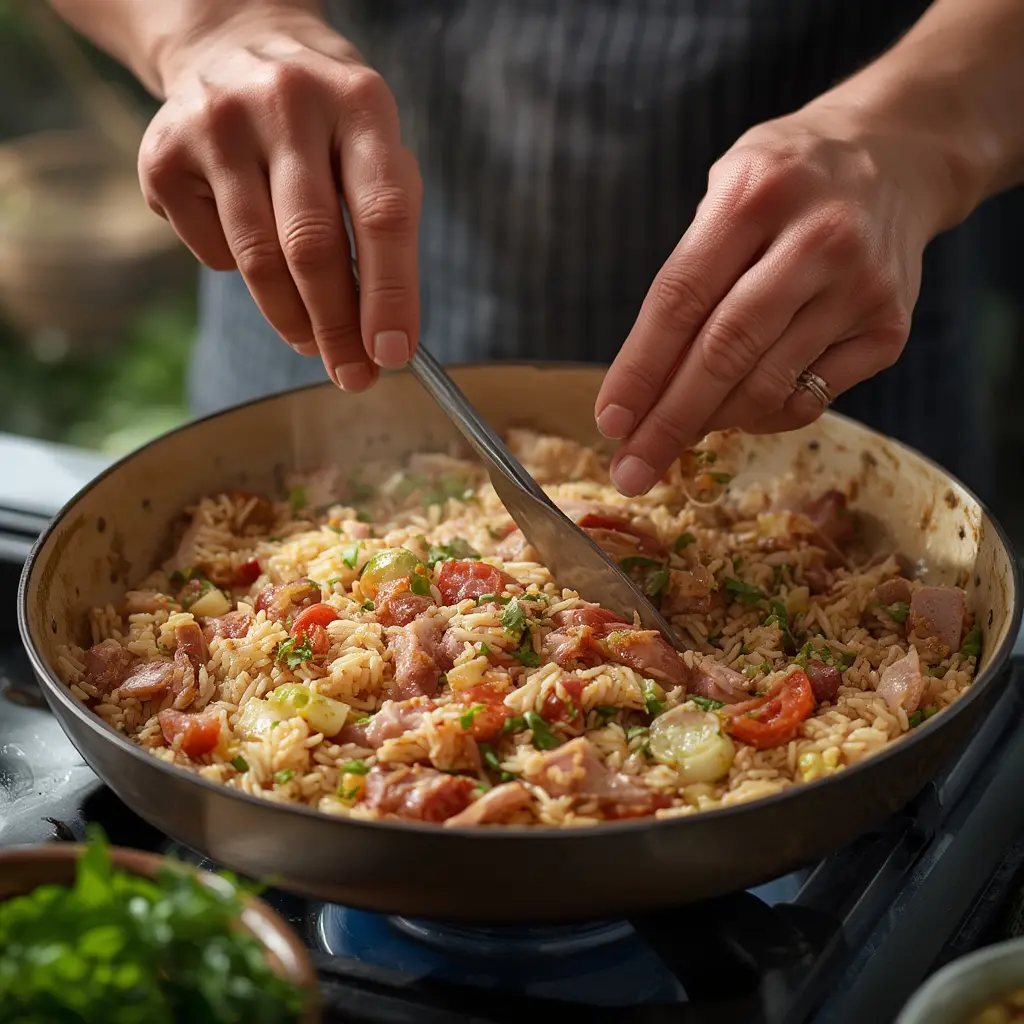
- Fry the rice: Add the remaining 1½ tablespoons of sesame oil, then add all the cold rice in one layer across the wok. Press it down gently with your spatula and let it sit untouched for about 1 minute — this is how you get those gorgeous toasted, slightly crispy bits of rice. Then toss everything together vigorously.
- Bring it all together: Return the seared ham to the wok. Pour the sauce mixture evenly over everything. Toss continuously for 1–2 minutes, making sure the sauce coats every grain of rice. Taste and adjust — more soy sauce for saltiness, a drizzle more sesame oil for richness.
- Finish and serve: Remove from heat and fold in the green tops of your sliced green onions. Plate immediately and top with toasted sesame seeds or a drizzle of chili oil if you’re feeling bold.
For a deeper visual walkthrough of each stage, this ham stir fry rice guide breaks down every step with photos to make sure your first attempt is a success.
—
Expert Secrets
- Temperature is everything: A lukewarm pan makes steamed rice, not fried rice. Crank that heat to high and don’t back down — the goal is a quick, fierce cook, not a slow simmer.
- Don’t crowd the pan: If you’re doubling the recipe, cook it in two separate batches. Overcrowding drops the pan temperature and ruins that desired sear.
- Season the ham intentionally: Even though ham is already salty, a light toss in white pepper before searing elevates its flavor in a noticeable way.
- The egg timing matters: Slightly undercooking the eggs before folding them in is deliberate — they finish cooking once mixed with the hot rice, giving you silky, custardy pieces rather than rubbery chunks.
- Use toasted sesame oil as a finisher, not a cooking oil: Sesame oil has a low smoke point and its nutty flavor degrades under prolonged high heat. Add it toward the end for maximum impact.
- Taste before adding salt: Ham and soy sauce both bring significant sodium. Always taste before reaching for the salt shaker.
—
Make It Your Own
Dietary Swaps:
- Gluten-free: Use tamari instead of soy sauce and check that your oyster sauce is certified GF (or skip it entirely)
- Lower sodium: Reduce the soy sauce to 1½ tablespoons and use a no-sodium-added stock splash in place of fish sauce
Flavor Variations:
- Spicy version: Add 1–2 teaspoons of sambal oelek or gochujang to the sauce mixture for a fiery, complex kick
- Hawaiian twist: Toss in ½ cup crushed pineapple chunks and swap ham for teriyaki-glazed ham — sweet, salty, and tropical
- Egg fried rice focus: Double the eggs (use 5–6) and reduce the ham to a supporting role for a richer, more eggy bite
Ingredient Alternatives:
- No oyster sauce: Hoisin sauce works beautifully as a substitute, though it’ll add a slightly sweeter flavor profile
- Brown rice swap: Use cooked brown rice for extra fiber and a nuttier flavor — just note it’ll be slightly chewier
- Turkey or chicken: If you’re post-Thanksgiving rather than post-Easter, diced roasted turkey makes an excellent stand-in for the ham
—
How to Serve & Enjoy
- As a standalone meal: This is a complete one-pan dinner on its own — protein, carbs, and vegetables all in one bowl.
- With a simple soup: A light egg drop soup or miso soup on the side transforms it into a fuller dinner spread without much extra effort.
- Garnish generously: A scatter of toasted sesame seeds, a drizzle of chili oil, and fresh cilantro leaves take the presentation from weeknight casual to genuinely impressive.
- For brunch: Pair with a simple cucumber salad dressed in rice vinegar and a poached egg on top — leftover fried rice for brunch is criminally underrated.
- Family-style serving: Bring the wok straight to the table with individual toppings set out — sliced jalapeños, lime wedges, extra soy sauce — and let everyone customize their bowl.
—
Keeping It Fresh
Fridge:Store leftovers in an airtight container for up to 4 days. The flavors actually intensify overnight, making day-two leftovers arguably even better than the original batch.
Freezer:This dish freezes surprisingly well. Portion into zip-lock freezer bags or airtight containers and freeze for up to 2 months. Lay the bags flat to freeze, then stack them upright for space-efficient storage.
Reheating:Skip the microwave if you can — it tends to create uneven hot spots and steams the rice into mushiness. Instead, reheat in a hot skillet with a light drizzle of sesame or vegetable oil, tossing frequently for 3–4 minutes until heated through. It comes back to life beautifully this way.
Make-Ahead Tips:The sauce can be mixed and refrigerated up to a week in advance. The vegetables can be chopped and stored in the fridge for 2–3 days. Having these ready makes this an almost effortless dinner on busy nights.
—
Nutrition Facts
Per serving (estimated, based on 4 servings):
- Calories: 420
- Protein: 22g
- Carbohydrates: 48g
- Fat: 14g
- Fiber: 3g
- Sodium: 890mg
Values are approximate and will vary based on specific ingredients, ham type, and portion sizes.
—
There’s something genuinely satisfying about turning ingredients that were headed toward “fridge ambiguity” into a meal that everyone at the table actually gets excited about. That’s the quiet superpower of this dish — it’s resourceful cooking that never feels like it.
Whether this is your first time experimenting with fried rice at home or you’re a seasoned wok-wielder looking for a fresh take, I’d love to know how yours turned out. Did you throw in a surprise ingredient? Go heavy on the chili oil? Make it with brown rice? Drop your experience in the comments below — I read every single one, and I genuinely love hearing what twists people bring to their version.
If you’re hungry for more inspiration beyond this recipe, there’s a whole world of creative ham and rice recipes out there to explore once you’ve mastered this one.
—
Your Questions Answered
Q: My rice keeps clumping together in the wok — what am I doing wrong?A: Almost certainly, the rice was either too fresh (still warm and moist) or the pan wasn’t hot enough. Cold, day-old rice has dried out just enough to fry as individual grains rather than sticking together. If you need to use fresh rice, spread it thin on a baking sheet and refrigerate for at least an hour before cooking.
Q: Can I use canned ham instead of leftover cooked ham?A: Absolutely, and it actually works really well. Dice it into small cubes and sear it just as you would with leftover ham. Canned ham tends to be a bit saltier, so reduce your soy sauce by about ½ tablespoon and taste as you go.
Q: Why does my fried rice taste flat compared to restaurant versions?A: Two likely culprits — heat and sesame oil timing. Restaurants cook on commercial burners that run far hotter than home stoves, so push your burner to its absolute maximum. Also, many home cooks add sesame oil at the start of cooking, which burns off the flavor. Add it at the very end, right before serving, for that signature nutty aroma.
Q: The ham I’m using is honey-glazed — will the sweetness throw off the savory sauce?A: Not at all — it actually adds a lovely caramelized complexity. The soy sauce and white pepper balance the sweetness naturally. If anything, honey-glazed ham tends to sear even more beautifully because of the natural sugars. Just be mindful that your overall dish may lean slightly sweeter, so you can omit the pinch of sugar from the sauce.
Q: Can I make this in an air fryer or Instant Pot instead of a wok?A: The wok or skillet really is the best tool for this specific dish — the high, direct heat is what creates the texture and flavor. An Instant Pot will essentially steam your rice mixture, yielding a mushy result. An air fryer can work for small batch reheating but not for the initial cook. If you don’t have a wok, a wide cast-iron skillet over maximum heat is your next best option.
Q: How do I know the ham is properly seared and not just heated through?A: Look for visible golden-brown edges on the cut sides of the ham cubes — that caramelization is what you’re after. The ham should resist moving slightly when you press a piece with the spatula, indicating it’s formed a crust rather than just warming up. This step usually takes 60–90 seconds of uninterrupted contact with the hot pan.
Q: Can I skip the oyster sauce if I don’t have it?A: Yes, though it does add a savory-sweet umami layer that’s hard to replicate exactly. Your best substitutes are hoisin sauce (sweeter, slightly thicker), a small splash of Worcestershire sauce (use half the amount), or simply an extra half teaspoon of soy sauce combined with a tiny pinch of sugar to mimic that balance.
