
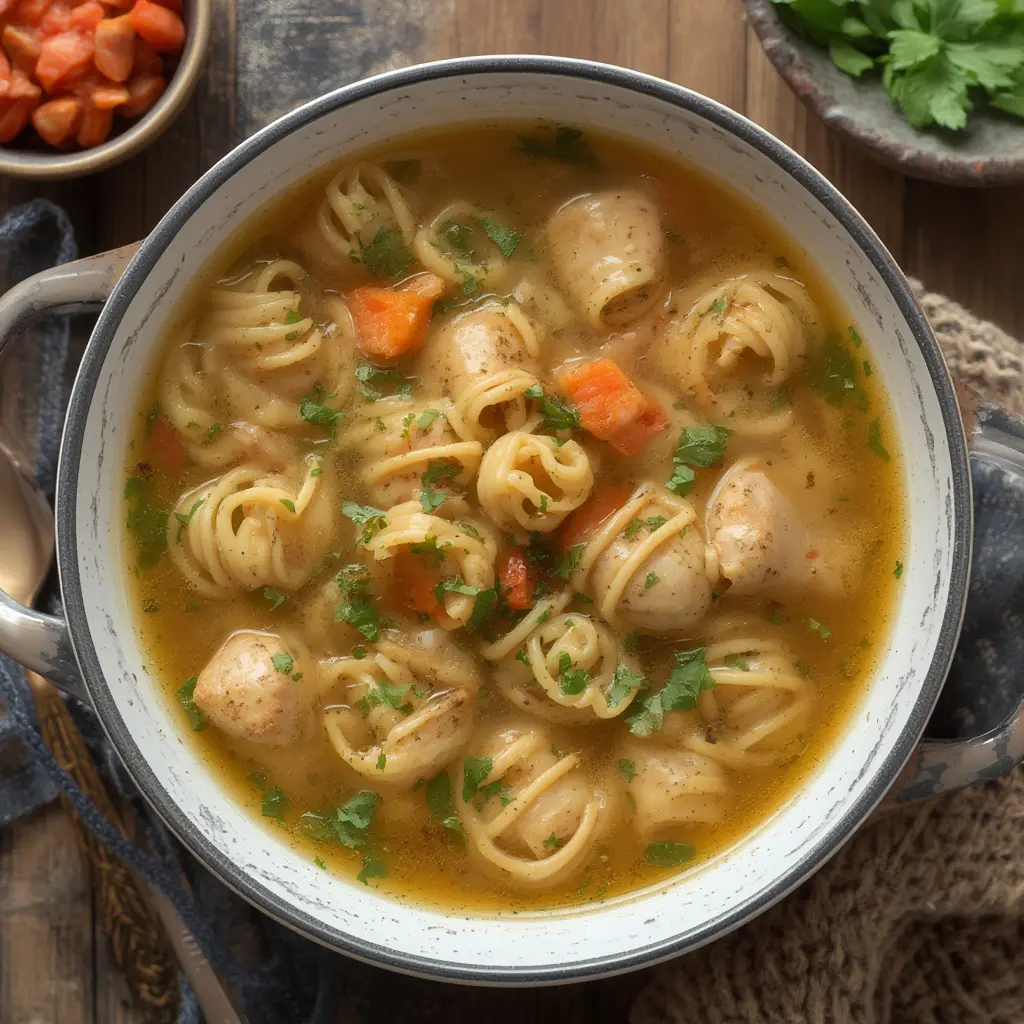
The Tiny Pasta That Tastes Like a Warm Hug: Chicken Broth Ditalini
There’s something almost magical about the smell of golden chicken broth bubbling on the stove. It curls through the kitchen, creeps under doorways, and pulls everyone in from the other room without a single announcement. Now imagine that broth deeply savory, faintly herby, impossibly comforting swirling around tiny, perfectly cooked pasta tubes that have soaked up every last drop of flavor. That’s exactly what lands on the table when you make this recipe, and honestly, it might be the most underrated bowl of pasta in the entire comfort food universe.
What surprises most people is just how much flavor you can coax from so few ingredients. This dish leans hard into Italian tradition specifically the kind of no-fuss, peasant-style cooking where a handful of pantry staples becomes something that tastes like it simmered for hours. A good-quality broth, a knob of butter, a snowfall of Parmesan, and a generous handful of ditalini are genuinely all you need. If you’ve been looking for a weeknight dinner that feels both effortless and elegant, chicken broth ditalini is exactly that recipe.
What I love most about this dish beyond the obvious comfort factor is its versatility. It works as a light solo dinner, a starter before a heartier second course, or even a restorative bowl when someone in the house isn’t feeling their best. Kids inhale it. Adults go back for seconds. It’s one of those rare recipes that genuinely pleases everyone at the table, every single time.
At a Glance:
- ⏲️ Prep: 5 min
- 🔥 Cook: 20 min
- ⏰ Total: 25 min
- 🍴 Serves: 4
- 📊 Level: Easy
- 🌍 Cuisine: Italian-Inspired
- 🥘 Type: Soup / Light Pasta Dish
- 🥗 Diet: Can be made gluten-free
What Makes This Ditalini in Chicken Broth So Irresistible
Before you even take a bite, this dish earns its place in your regular rotation for a dozen different reasons. But let’s focus on the best ones:
- It’s pantry-friendly. Most of these ingredients are already in your kitchen right now. No specialty shopping required.
- It’s ready in under 30 minutes. From cold stovetop to steaming bowl, the whole thing comes together faster than most takeout orders arrive.
- The flavor is wildly disproportionate to the effort. Cooking the pasta directly in broth rather than water means every tiny ditalini tube absorbs deep, savory flavor all the way through.
- It’s endlessly customizable. Add shredded rotisserie chicken, wilted spinach, a soft-poached egg, or keep it beautifully simple. The base recipe adapts to whatever you have on hand.
- It’s genuinely soothing. There’s real culinary science behind why broth-based dishes feel restorative but even without the science, your gut already knows this bowl is good for you.
What You’ll Need
Simple, honest ingredients that’s the whole ethos here. Quality matters more than quantity, so reach for the best broth you can find (or make your own if you’re feeling ambitious).
For the Pasta Broth Base:
- 6 cups good-quality chicken broth (low-sodium preferred, so you control the salt)
- 1½ cups ditalini pasta (dry weight)
- 2 tablespoons unsalted butter
- 2 garlic cloves, minced
- 1 small yellow onion, finely diced
- ½ teaspoon dried thyme
- Salt and freshly cracked black pepper, to taste
For Finishing:
- ½ cup freshly grated Parmesan cheese (plus more for serving)
- 2 tablespoons fresh flat-leaf parsley, roughly chopped
- A drizzle of good extra-virgin olive oil
Optional Add-ins:
- 1–2 cups shredded cooked chicken
- A handful of baby spinach or kale
- A squeeze of fresh lemon juice (it brightens everything)
- Red pepper flakes, for a gentle kick
A quick note on broth: If you can find a high-quality boxed or jarred chicken bone broth, use it the extra gelatin gives the finished dish a richer, silkier mouthfeel. Homemade is always wonderful, but honestly, a good store-bought version works beautifully here.
Kitchen Essentials
Nothing intimidating here, but a few specific tools will make your cooking smoother:
- Large, deep saucepan or Dutch oven You want enough depth so the broth doesn’t splatter as it simmers
- Wooden spoon or silicone spatula For stirring without scratching your pan
- Ladle Essential for serving without splashing precious broth
- Fine grater or Microplane Freshly grated Parmesan melts more smoothly than pre-shredded
- Measuring cups Getting the pasta-to-broth ratio right matters here
How to Make Chicken Broth Ditalini (Step-by-Step)

The method here is deliberately simple, but there are a few small moments where technique makes a real difference. Follow these steps closely the first time, and you’ll have it memorized by the second.
- Sweat the aromatics: Melt the butter over medium heat in your Dutch oven or deep saucepan. Once it foams, add the diced onion and cook for 4–5 minutes until softened and translucent. Stir occasionally you want it tender, not browned.
- Add the garlic: Toss in the minced garlic and dried thyme. Cook for just 60 seconds, stirring constantly. The moment it becomes fragrant that warm, toasty garlic smell it’s time to move on. Any longer and it risks turning bitter.
- Pour in the broth: Add all 6 cups of chicken broth to the pot. Raise the heat to medium-high and bring it to a steady, gentle boil. Taste it now. This is your moment to adjust salt before the pasta goes in.
- Add the ditalini: Once the broth is boiling, add your dry ditalini directly into the pot. Stir well to prevent sticking. Now, if you’ve ever wondered about how long to cook ditalini pasta in broth versus water it typically takes 9–11 minutes in simmering broth (a minute or two longer than boiling salted water), since broth simmers at a slightly lower temperature and the starch absorption slows things down a touch.
- Stir frequently: Unlike pasta cooked in a big pot of boiling water, ditalini in a smaller volume of broth will stick if you ignore it. Stir every 2 minutes or so. This also releases starch into the broth, which gives the liquid a beautiful, slightly thickened consistency.
- Check for doneness: Start tasting at the 9-minute mark. You want the pasta al dente tender with just a whisper of firmness in the center. It will continue softening slightly off the heat, so pull it just before it reaches your ideal texture.
- Finish with Parmesan: Reduce the heat to low and stir in the grated Parmesan in two additions, letting each handful melt fully before adding the next. The cheese will emulsify into the broth, making it glossy and wonderfully savory.
- Season and rest: Taste once more and adjust salt and pepper. Remove from heat and let the pot sit, uncovered, for 2 minutes. The pasta will finish absorbing broth during this rest, and the flavors will settle beautifully.
- Garnish and serve: Ladle into warmed bowls. Scatter fresh parsley over the top, add a little extra Parmesan, and finish with a thin drizzle of olive oil. Serve immediately.
Expert Secrets for the Best Results
- Don’t skip the butter: It might seem like a minor addition, but butter blooms the aromatics differently than olive oil and contributes a subtle richness to the broth that you’ll absolutely notice if you leave it out.
- Warm your bowls: A quick 30-second rinse with hot water before ladling the soup keeps the dish at the right temperature all the way to the last spoonful.
- Broth-to-pasta ratio is everything: Ditalini is a thirsty pasta. If the soup looks too thick after the rest period, add a splash of hot broth or water to loosen it. Conversely, if it looks too thin, let it bubble uncovered for a minute more.
- Use fresh Parmesan only: Pre-shredded, shelf-stable Parmesan contains anti-caking agents that prevent proper melting and can leave a grainy texture in your broth. A fresh wedge makes a noticeable difference.
- Add shredded chicken last: If you’re using rotisserie chicken or any pre-cooked chicken, stir it in during the final two minutes just enough to warm through without making it rubbery.
- Lemon is your secret weapon: A tiny squeeze of fresh lemon juice added right before serving lifts every other flavor in the bowl without making it taste citrusy. It just makes everything brighter.
Make It Your Own
Dietary Swaps:
- Gluten-free: Substitute certified GF ditalini or small rice-shaped pasta. Cooking time may vary by a minute or two.
- Dairy-free: Skip the Parmesan and stir in a tablespoon of nutritional yeast plus an extra drizzle of olive oil for richness.
Flavor Variations:
- Italian Wedding-Inspired: Add tiny homemade meatballs and a handful of spinach during the last 5 minutes of cooking.
- Creamy Version: Stir in 3 tablespoons of heavy cream along with the Parmesan for a velvety, bisque-like finish.
- Herb Garden Style: Replace the thyme with a combination of fresh rosemary and sage for a more rustic, wintry flavor profile.
Ingredient Alternatives:
- No ditalini on hand? Orzo, tubetti, or small elbow macaroni all work well with similar cooking times.
- Vegetarian swap: Use a high-quality vegetable broth in place of chicken broth add a Parmesan rind to the pot while it simmers for that elusive savory depth.
How to Serve & Enjoy
- As a standalone dinner: Pair with crusty sourdough bread for dipping essential for not wasting a drop of that gorgeous broth.
- As a first course: Serve in smaller portions before a simple roasted chicken or grilled fish for an elegant, bistro-style meal.
- For the sick or tired: This is the bowl you make when someone needs comfort fast. Skip the garnishes, make it gentle, and serve with love.
- Elevated dinner party presentation: Ladle into shallow wide bowls, shave Parmesan over the top with a vegetable peeler, and add a single sprig of fresh thyme for a restaurant-worthy presentation that takes about 45 seconds of extra effort.
Keeping It Fresh

Fridge:Store leftovers in an airtight container for up to 3 days. Keep in mind that the pasta will continue absorbing broth as it sits, so your leftovers will be noticeably thicker than the freshly made version.
Freezer:Not the ideal candidate for freezing, unfortunately. The ditalini turns mushy upon thawing and the broth-to-pasta ratio becomes unbalanced. If you want to freeze a version of this, freeze only the broth base (without the pasta) and cook fresh ditalini when you’re ready to serve.
Reheating:Warm refrigerated leftovers gently on the stovetop over medium-low heat, adding a generous splash of chicken broth or water (¼ to ½ cup per serving) to restore the original consistency. Stir frequently as it heats through, and re-season with salt and Parmesan before serving.
Make-Ahead Strategy:The aromatic base butter, onion, garlic, and broth can be prepared up to 3 days ahead and stored in the fridge. When it’s dinnertime, simply bring the broth back to a boil and add the dry pasta fresh. The whole thing is table-ready in about 12 minutes.
Nutrition Facts
Per serving (estimated, based on 4 servings without optional add-ins):
- Calories: 310
- Protein: 11g
- Carbs: 42g
- Fat: 10g
- Sodium: 720mg (varies significantly based on broth choice)
These values are approximate and will change based on specific brands and any optional additions.
There’s a reason this style of simple, broth-forward pasta has endured for centuries in Italian kitchens it’s honest food that delivers more than it promises. Whether you’re cooking it for a cozy Tuesday night or pulling it out when someone needs a restorative, nourishing bowl, this recipe genuinely delivers every time.
The beautiful thing about this dish is that once you’ve made it once, it becomes yours. You’ll start riffing adding a handful of whatever vegetables are in the fridge, swapping in a different herb, deciding that a little more Parmesan never hurt anyone. That’s exactly the spirit this recipe is meant to inspire.
So here’s what I want to know: what variation are you going to try first? Are you going for the classic version, loading it up with shredded chicken, or going full comfort mode with the creamy finish? Drop your answer in the comments below I read every single one, and honestly, your variations often end up better than the original recipe!
Your Questions Answered
Q: My broth looks really thick by the time the pasta is done almost like a stew. Did I do something wrong?A: Not at all! Ditalini releases a lot of starch as it cooks, which naturally thickens the liquid. It’s actually a sign you were stirring well. If the texture feels too thick for your preference, simply stir in a splash of hot chicken broth until it reaches the consistency you like. It loosens up beautifully.
Q: Can I cook the ditalini separately and add it to the broth at the end?A: You can, but you’d be sacrificing the best part of the recipe. Cooking the pasta directly in the broth is what allows each little tube to absorb all that flavor from the inside out. If you cook it separately in salted water, you’ll end up with bland pasta floating in flavorful broth rather than the two being fully integrated. Trust the process!
Q: What’s the best type of chicken broth to use boxed, canned, or homemade?A: All three work, but with different results. Homemade bone broth gives you the richest, silkiest texture. A good boxed chicken bone broth (look for ones with gelatin listed) is an excellent second choice. Standard canned or boxed broth is fine but will produce a lighter final result. Whatever you use, taste it before you start cooking if it doesn’t taste good straight from the carton, it won’t be great in the finished dish.
Q: Can I add raw chicken pieces directly to the broth while the pasta cooks?A: For food safety, I wouldn’t recommend adding raw chicken to the pot at the same time as the pasta the timing doesn’t work out well and you risk either underdone chicken or overdone pasta. Instead, poach chicken breasts separately in broth first (about 15–18 minutes), shred the meat, and stir it in during the last 2 minutes of the pasta’s cooking time.
Q: The garlic burned before I could add the broth. Can I salvage the dish?A: Unfortunately, burnt garlic is very hard to rescue it will make the entire dish bitter. The best move is to wipe out the pot, start the butter and aromatics again from scratch, and set a timer for 60 seconds the moment the garlic hits the pan. Medium heat (not medium-high) and constant stirring are your two best defenses against this happening again.
Q: Is there a way to make this dish more filling without adding meat?A: Absolutely. Stir in a can of drained white cannellini beans during the last 3 minutes of cooking they add protein, creaminess, and substance without overpowering the delicate broth flavor. A couple of handfuls of baby kale or torn spinach wilted in at the end is another great way to bulk it up while keeping things light.
Q: My ditalini turned out mushy even though I followed the timing. What happened?A: A few possibilities: your broth may have been at a rolling boil rather than a gentle simmer (high heat overcooks pasta fast), your pot may have been retaining heat aggressively, or the ditalini brand you used has a shorter cook time than average. Next time, start checking for doneness at the 8-minute mark and remember to pull the pasta slightly before it reaches your ideal texture it keeps cooking in the residual heat after you remove it from the stove.
Have you tried the dish?
There are no reviews yet. Be the first one to write one.
