

The Unexpected Cake That Stole the Show at My Family Reunion
Picture this: It’s a sweltering July afternoon, the kind where the air feels thick and sweet, and every single person at the potluck table is already reaching for their second slice of a golden, citrus-perfumed cake before the potato salad even gets opened. That’s exactly what happened the first time my Aunt Rosemary set down her bundt pan and quietly walked away no fanfare, no recipe card in sight. Just absolute chaos as everyone scrambled to figure out what was in that impossibly tender, bright lemon cake with the crackly sugared crust.
The secret? A cold can of 7UP poured straight into the batter. I know stay with me. That fizzy lemon-lime soda acts like a secret weapon, creating a texture that sits somewhere between a classic pound cake and a fluffy layer cake. It’s lighter than you expect, with tiny air pockets that soak up every drop of the lemon glaze. Once I finally pried the method from my aunt, I couldn’t stop making it. This 7 up lemon cake has since become my most-requested dessert, and honestly, I think it’s earned that title.
Whether you’re a from-scratch baker or someone who likes a shortcut on busy weeknights, this recipe meets you exactly where you are. If you’ve ever explored a 7 up cake using cake mix approach, you’ll appreciate how the soda transforms even simple ingredients into something genuinely special. But this version? We’re going all in butter, fresh lemon zest, and enough citrus punch to brighten your entire afternoon.
At a Glance:
- ⏲️ Prep: 20 min
- 🔥 Cook: 60–65 min
- ⏰ Total: 1 hr 30 min (including cooling)
- 🍴 Serves: 12–14 slices
- 📊 Level: Easy
- 🌍 Cuisine: American Southern
- 🥘 Type: Dessert / Snack Cake
- 🥗 Diet: Vegetarian
What Makes This 7 Up Lemon Cake Absolutely Irresistible
Let’s be honest there are a thousand lemon cake recipes on the internet. So why bother with this one? Here’s what genuinely sets it apart:
- The carbonation does the heavy lifting. That bubbling soda loosens the batter and gives you a crumb that’s dense and tender at the same time without a drop of buttermilk or baking soda required.
- No mixer anxiety. This comes together beautifully with a hand mixer or a sturdy stand mixer on medium speed, and the batter is forgiving enough for beginner bakers.
- Real lemon flavor layered, not fake. Between the zest in the batter and the fresh juice in the glaze, every single bite tastes like sunshine. We’re not relying on extract alone here.
- It travels like a dream. Baked in a bundt pan, this cake holds its shape perfectly for potlucks, picnics, and gifting. No crumbling, no fuss.
- The leftovers are arguably better. By day two, the glaze seeps deeper into the crumb and the flavor intensifies. If it lasts that long.
- One bowl, minimal cleanup. Beyond the bundt pan itself, you’ll barely dirty more than a mixing bowl and a whisk. That’s a weeknight win.
What You’ll Need
For the Cake:
- 3 cups all-purpose flour spooned and leveled, not packed
- 3 cups granulated sugar
- 1 cup (2 sticks) unsalted butter, softened to room temperature
- 5 large eggs, room temperature
- 3/4 cup sour cream full fat for best results
- 1 cup (8 oz) 7UP soda, at room temperature (flat or lightly fizzy both work)
- 3 tablespoons fresh lemon zest (about 3 large lemons)
- 2 tablespoons fresh lemon juice
- 1 teaspoon pure vanilla extract
- 1/2 teaspoon salt
For the Lemon Glaze:
- 2 cups powdered sugar, sifted
- 3–4 tablespoons fresh lemon juice (adjust to your preferred consistency)
- 1 tablespoon lemon zest
- 1–2 teaspoons 7UP (for a barely-there fizz in the glaze optional but fun)
Optional Garnish:
- Thin lemon slices or twists
- A light dusting of powdered sugar
- Fresh mint sprigs
Ingredient note: Room temperature butter and eggs aren’t optional here they’re what give the batter its smooth, emulsified base. Pull them out at least an hour before you start. Can’t find 7UP? Sprite works nearly identically, and Sierra Mist is another solid swap.
Kitchen Essentials
- 10–12 cup bundt pan the deeper the pan, the more dramatically beautiful your cake looks when released
- Stand or hand mixer creaming the butter and sugar properly is the backbone of this recipe’s texture
- Microplane or fine zester for getting maximum lemon zest without the bitter pith
- Rubber spatula critical for scraping every bit of that gorgeous batter into the pan
- Wire cooling rack glazing directly on this prevents a soggy bottom
- Fine mesh sieve for dusting powdered sugar cleanly and evenly
How to Make 7 Up Lemon Cake (Step-by-Step)

- Prep your pan thoroughly: Preheat your oven to 325°F (163°C). Generously grease every crevice of your bundt pan with softened butter, then dust with flour, tapping out any excess. This step is non-negotiable a properly prepared pan is the difference between a cake that releases cleanly and one that sticks in heartbreaking chunks.
- Zest your lemons first: Before you do anything else, zest all three lemons directly into a small bowl. The natural oils release better when the fruit is still whole. Set aside a tablespoon of zest specifically for your glaze.
- Cream butter and sugar: In your stand mixer fitted with the paddle attachment (or using a hand mixer), beat the softened butter on medium speed for about 2 minutes until it looks pale and fluffy. Gradually add the granulated sugar and continue beating for another 4–5 minutes. The mixture should look almost white and feel light when you rub it between your fingers. Don’t rush this step it’s what creates that tender, fine crumb.
- Add eggs one at a time: Drop in your eggs one at a time, letting each one fully incorporate before adding the next. Scrape down the sides of the bowl between additions. The batter might look slightly curdled around egg three or four that’s normal. It comes together beautifully once the flour is added.
- Mix in lemon zest and vanilla: Stir in the lemon zest, lemon juice, and vanilla extract. At this point, take a moment to inhale that fragrance is genuinely extraordinary.
- Add sour cream: Mix in the sour cream until just combined. It adds richness and a subtle tang that keeps the cake from tasting one-dimensionally sweet.
- Alternate flour and 7UP: On low speed, add the flour in three additions, alternating with the 7UP in two additions (flour, soda, flour, soda, flour). Begin and end with flour. Mix only until each addition disappears overmixing activates gluten and gives you a tough cake. The batter will be thick but scoopable.
- Pour and even out: Transfer the batter into your prepared bundt pan using a rubber spatula, spreading it into an even layer. Tap the pan firmly on the counter two or three times to release any hidden air bubbles.
- Bake low and slow: Place the pan on the center oven rack and bake for 60–65 minutes. At the 55-minute mark, start testing with a wooden skewer inserted into the thickest part of the cake it should come out with just a few moist crumbs, not wet batter.
- Cool strategically: Let the cake rest in the pan on a wire rack for exactly 15 minutes not less, not more. Too short and the cake crumbles on release; too long and it steams itself loose in a less elegant way. Then invert onto the rack and let it cool completely before glazing, at least another 45 minutes.
- Whisk the glaze: Combine sifted powdered sugar, lemon juice, lemon zest, and that optional splash of 7UP in a bowl. Whisk until smooth and pourable. It should drizzle off a spoon in a slow, thick ribbon.
- Glaze with intention: Pour the glaze slowly and deliberately over the cooled cake, letting it run naturally into the ridges of the bundt. For a heavier glaze coating, let the first layer set for 10 minutes and add a second pour.
My Best Advice for Bundt Cake Success
- Temperature is everything: Cold butter won’t cream properly, and cold eggs can seize the batter. Leave both out at least 60 minutes ahead. This single habit will improve your baking more than almost anything else.
- Measure flour with a light hand: Packing flour into your measuring cup is the most common reason cakes turn out dry and heavy. Spoon flour into the cup, then level it off with a straight edge.
- Don’t open the oven door early: Resist the urge to peek before the 50-minute mark. A sudden drop in temperature during the early bake can cause the center to sink.
- Room temperature soda vs. cold: Using soda at room temperature preserves more of the carbonation when it hits the batter, which means a slightly lighter crumb. It’s a small detail that makes a real difference.
- The glaze sweet spot: If your glaze is too thick, add lemon juice a half-teaspoon at a time. Too thin? Sift in more powdered sugar gradually. You want it to coat the back of a spoon without dripping immediately.
- Trust the skewer, not the clock: Ovens vary. Start checking at 55 minutes and go by the skewer test rather than the timer.
Creative Twists
Dietary Swaps:
- Swap sour cream for full-fat Greek yogurt for a slightly tangier, higher-protein version
- Use dairy-free butter and coconut cream to make this completely dairy-free the texture shifts slightly but stays delicious
Flavor Variations:
- Lemon-Lavender: Add 1 teaspoon of culinary lavender (finely ground) to the batter for a floral, bakery-worthy twist
- Lemon-Blueberry: Fold 1 cup of fresh blueberries tossed in a tablespoon of flour into the batter just before pouring
- Lemon-Coconut: Replace 1/2 cup of flour with toasted shredded coconut mixed into the batter and press toasted coconut flakes onto the glaze while it’s still wet
Ingredient Alternatives:
- Sprite or Sierra Mist: Nearly identical carbonation and flavor profile to 7UP
- Club soda: For a more neutral citrus note that lets the lemon zest take full center stage
How to Serve & Enjoy
- Casual afternoon: Slice thick and serve alongside a glass of unsweetened iced tea or cold lemonade. No garnish needed the cake speaks for itself.
- Dinner party finish: Plate individual slices on a pool of raspberry coulis, add a small scoop of vanilla bean ice cream, and finish with a curl of lemon zest.
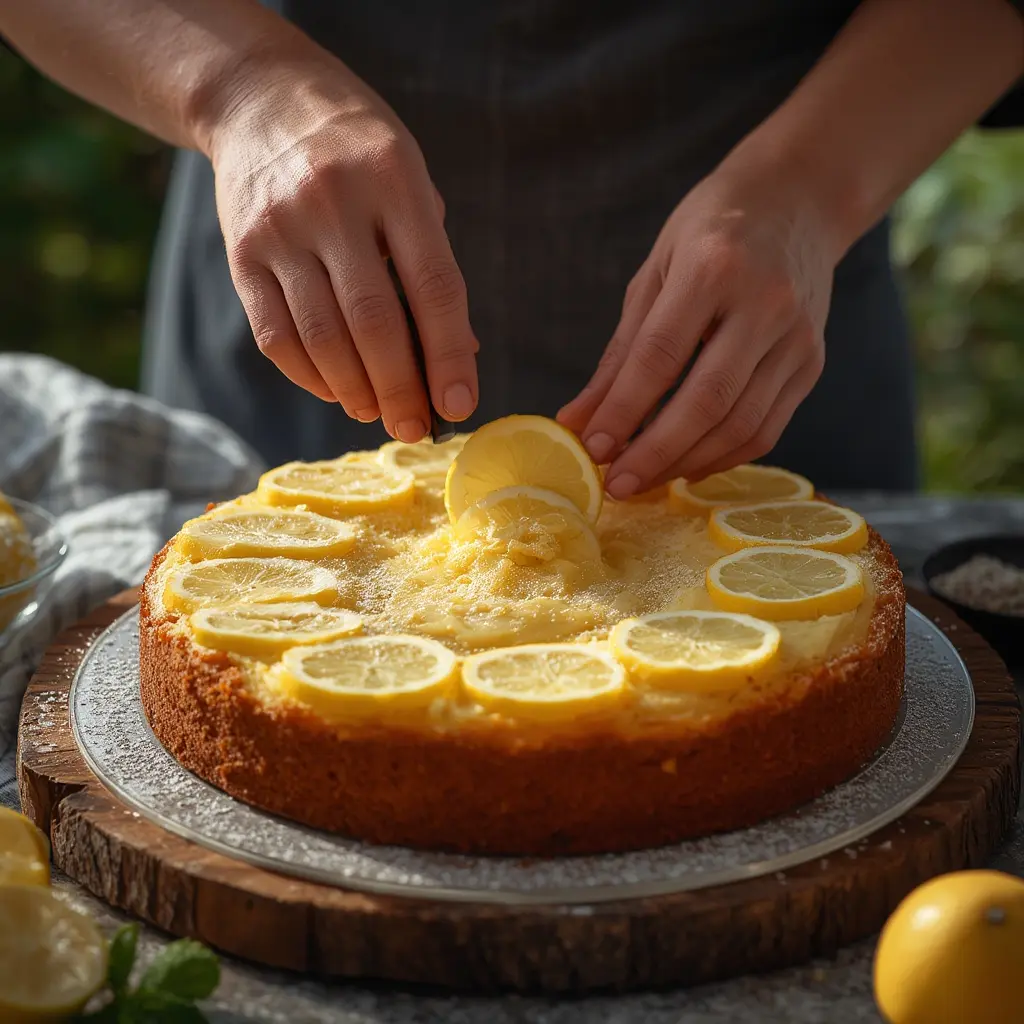
- Brunch centerpiece: Present the whole glazed bundt on a cake stand dusted with powdered sugar and ringed with fresh lemon slices it looks like you spent all day on it.
- Gift-giving: Wrap individual slices in parchment and twine. This cake is dense enough to travel well and keeps beautifully for two days at room temperature.
Keeping It Fresh
Room Temperature: Store the glazed cake under a cake dome or wrapped tightly in plastic wrap at room temperature for up to 3 days. The flavor actually deepens on day two.
Fridge: If your kitchen runs warm (above 75°F), transfer to an airtight container in the refrigerator for up to 5 days. Let slices come to room temperature for 20–30 minutes before serving for the best texture.
Freezer: This cake freezes beautifully before glazing. Wrap the fully cooled, unglazed cake tightly in two layers of plastic wrap, then a layer of foil. Freeze for up to 2 months. Thaw overnight at room temperature, then add fresh glaze before serving.
Make-Ahead: The glaze can be made up to 3 days ahead and stored in the refrigerator in a sealed jar. Give it a quick whisk and bring it to room temperature before drizzling.
Every lemon dessert lover has their version of “the one” and I genuinely believe this citrus-forward, soda-laced cake has earned that spot in your rotation. Whether you’re making it for a celebration or simply because Tuesday deserves something beautiful, this recipe delivers every single time.
I’d love to know how yours turns out what variation did you try? Did you go classic with the lemon glaze, or venture into blueberry-lemon territory? Drop your experience in the comments below. And if you want the full frosted version with step-by-step photos, the complete guide for this 7 up lemon cake with a showstopping frosting is waiting for you. Go make something wonderful.
Your Questions Answered
Q: Can I use diet 7UP or a sugar-free lemon-lime soda in this recipe?A: Technically yes, but the results will differ. Diet sodas often contain artificial sweeteners that can leave a slightly bitter aftertaste when baked, and the carbonation level can be inconsistent. For best flavor and texture, stick with regular 7UP. If you’re watching sugar, consider reducing the granulated sugar in the batter by 1/4 cup instead.
Q: My bundt cake stuck to the pan what went wrong and how do I prevent it next time?A: This is almost always a pan preparation issue. Butter every crevice obsessively, then dust with flour (not spray shortening alone that can lead to a gummy coating). Let the cake rest exactly 15 minutes before inverting, then give the pan a gentle firm tap on all sides before lifting. If it still sticks, run a thin flexible spatula carefully along the center tube.
Q: Why did my cake sink in the middle?A: A sunken center usually means the cake was underbaked, the oven door was opened too early, or there was too much leavening (though this recipe is forgiving on that front). Always check with a skewer wet batter means more time is needed, even if the outside looks done.
Q: Can I bake this in a regular loaf or tube pan instead of a bundt?A: A 10-inch tube pan (angel food pan) works beautifully and is actually the most traditional vessel for this style of cake. Two standard loaf pans also work reduce the baking time to approximately 45–55 minutes and start checking early. A round layer cake pan is not recommended, as the batter is too dense for that format.
Q: How do I know when to stop adding lemon juice to the glaze?A: The perfect glaze coats the back of a spoon and holds its shape for about 3 seconds before slowly dripping off. If you tip the spoon and the glaze runs immediately, add more powdered sugar. If you have to work to scrape it off, add lemon juice a half-teaspoon at a time.
Q: Can I double this recipe for a larger crowd?A: You can, but don’t try to bake a doubled recipe in a single pan most home bundt pans can’t handle that volume. Instead, bake in two separate bundt pans simultaneously (same rack, side by side if your oven fits them). The baking time stays the same; just start checking both pans at the 55-minute mark.
Q: Will the carbonation from the 7UP actually survive the baking process?A: Not entirely you won’t get a visibly bubbly batter once it’s in the oven. But the carbonation subtly aerates the batter before baking, creating tiny pockets that contribute to a lighter, more tender crumb than you’d get from a non-carbonated liquid. Think of it as a gentler, more natural version of what baking soda does.
Have you tried the dish?
There are no reviews yet. Be the first one to write one.
